Advertising Has an AI Problem — and It’s Called Imagination
May 12, 2026
For all the discussion surrounding artificial intelligence, most people are still asking the wrong question. The conversation tends to revolve around whether AI will replace writers, strategists, designers, consultants, coders, marketers, or agencies themselves. Increasingly, the answer to many of those questions appears to be “partially, yes.” AI is already proving remarkably effective at processing information, identifying patterns, synthesizing knowledge, and producing competent work at extraordinary speed. But there is a far more important question sitting underneath all of this — one that matters profoundly to industries built on original thinking: can AI truly imagine something that does not yet logically exist?
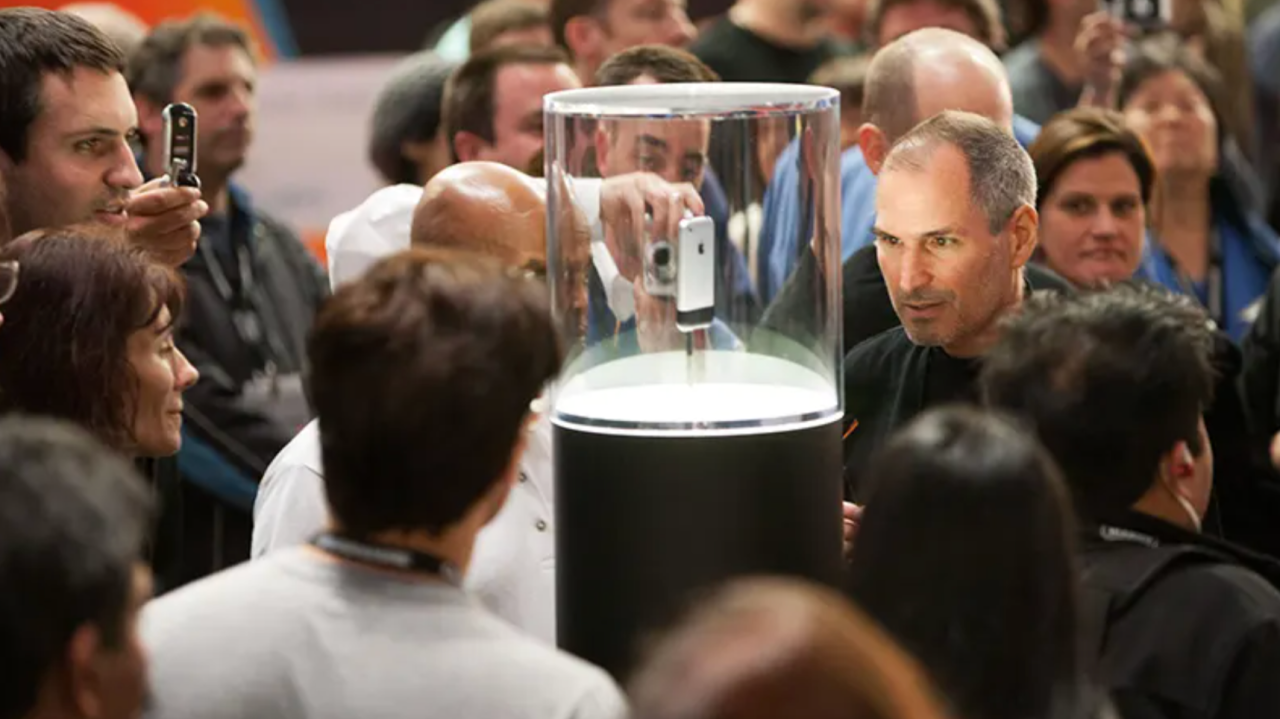
That distinction matters because the most transformative ideas in business history were rarely born from refinement alone. They emerged from imagination that initially looked irrational, commercially absurd, or disconnected from existing consumer behavior. And there may be no better example of this than the iPhone.
Today, it is almost impossible to appreciate how strange the iPhone sounded before it existed. In 2006, the mobile phone industry was dominated by companies like Nokia, Motorola, and Blackberry. Phones had keyboards because consumers supposedly wanted tactile input. Enterprise users prioritized secure email and battery life. Carriers largely controlled the software experience. Mobile internet was clunky and slow. Most people viewed a phone primarily as a communication device. Nearly every existing signal pointed toward improving the current model, not reinventing it.
Had an AI system been asked at the time to predict the future of mobile phones, it almost certainly would have projected a more advanced version of what already existed: better keyboards, smaller devices, improved battery performance, stronger enterprise functionality, and incremental feature upgrades. What it likely would not have envisioned was a slab of glass with no keyboard that combined communication, photography, entertainment, navigation, commerce, media consumption, and eventually entire economic ecosystems into a single object people would carry every waking moment of their lives.
That leap was not statistical. It was imaginative.
The iPhone did not emerge because consumers were demanding app ecosystems, ride-sharing, streaming video, or mobile-first banking. Entire industries that now define modern life barely existed before the iPhone created the behavioral infrastructure that enabled them. The breakthrough was not merely technological. It was Steve Jobs imagining human behavior before consumers themselves could articulate it.
And that distinction matters enormously for the advertising business.
Because despite how much the industry now talks about data, targeting, optimization, attribution, and automation, great agencies have always fundamentally been in the imagination business. Their value has never merely been producing more content faster or interpreting existing signals more efficiently. Their value has been seeing around corners — identifying emotional territory, cultural tension, human behavior, or creative approaches that consumers themselves did not yet know they would respond to.
The best campaigns in history were rarely born from consensus thinking. In many cases, they initially looked risky, polarizing, or difficult to justify through research. Truly memorable creative often breaks existing patterns before creating new ones. That is precisely why so much modern advertising feels interchangeable. Entire categories now operate inside a feedback loop where everybody studies the same metrics, copies the same conventions, and optimizes toward the same short-term performance indicators. Pharmaceutical advertising increasingly looks identical. Social media brand voices collapse into the same tone. Streaming creative often feels algorithmically assembled before it even reaches consumers.
AI will absolutely accelerate parts of this trend because it is extraordinarily good at learning from existing human output and reproducing recognizable patterns at scale. That makes it an incredibly powerful operational tool for agencies. It will improve research, production workflows, testing, personalization, and executional efficiency across nearly every discipline in the business.
But there is a meaningful difference between generating more work and generating breakthrough ideas.
The danger for agencies is not that AI will eliminate creativity. The danger is that the industry may increasingly confuse efficiency with imagination. And those are not remotely the same thing.
The greatest campaigns, products, and brands often emerge because somebody has the confidence to pursue an idea that initially appears improbable or difficult to validate through existing data. Imagination frequently involves emotional intuition, irrational leaps, cultural sensing, and the ability to envision behavior before evidence fully exists to support it. That remains deeply human territory.
Ironically, the rise of AI may ultimately clarify what humans are uniquely valuable for. Machines are rapidly becoming superior at information retrieval, synthesis, and repetitive execution. But the human ability to imagine something the market itself cannot yet see may become even more valuable in an economy increasingly flooded with competent sameness.
The iPhone was not born because the market requested it. It was born because somebody imagined a future that existing patterns could not yet predict. And for agencies that still aspire to create transformative ideas rather than merely efficient ones, that distinction may define the next era of the business.

More Insights

What Agency Executives Can Learn from the Most Successful Steakhouses
June 10, 2025

The Declining Value of Customer NPS Surveys
October 9, 2024
The Fallacy of Customer Experience as a Priority in Marketing Organizations
August 26, 2024

The Cobbler Has Worn-Out Shoes…The Case for Ad Agency Consultants
April 22, 2024

Navigating the In-House vs. Agency Conundrum
March 26, 2024

Today’s Digital Marketing Trap: Have Analytics Jumped the Shark?
March 14, 2024

What Health Insurance Marketers Can Learn From Starbucks
June 30, 2020


I Know Performance Marketing, and You, Sir, Are Not Performance Marketing
March 17, 2016

Nothing Ruins UX Like Putting a Big $ In Front of It
May 28, 2015

Would Everyone Please Stop Calling Salesforce, CRM?
November 10, 2014

What The Brady Bunch Taught Me About Content Marketing
October 29, 2014